
NIT Rourkela Develops Cutting – Edge Traffic Solutions
NIT rourkela develops cutting – edge technologies that redefine urban mobility by integrating sophisticated deep learning models into existing transportation infrastructures for 91 club members. Experience the future of smart city planning by exploring these technical advancements to transform your perspective on modern engineering.
Overviewing how NIT rourkela develops cutting – edge systems
The National Institute of Technology Rourkela has introduced a remarkable artificial intelligence framework designed to handle the chaotic nature of mixed traffic conditions. NIT rourkela develops cutting – edge deep learning models that outperform traditional sensor-based systems by accurately identifying various vehicle types in real-time video streams.
This innovation focuses on solving the specific challenges faced by developing countries where diverse transportation modes coexist on narrow and crowded urban roadways. The researchers utilize complex convolutional neural networks to ensure that every vehicle from bicycles to heavy trucks is detected with high precision.
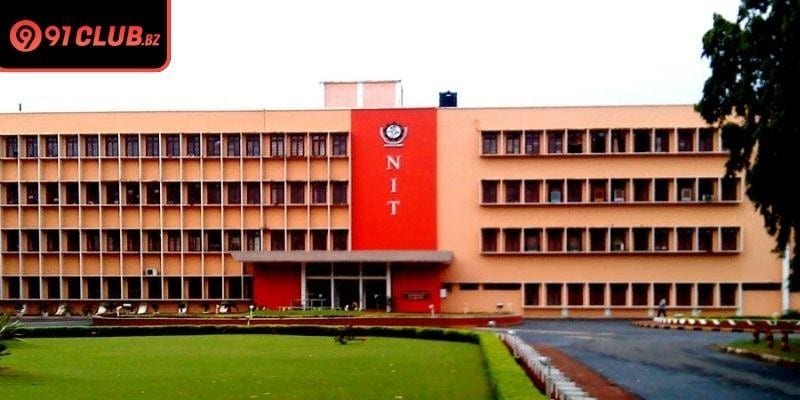
Deeply exploring how NIT rourkela develops cutting
The current research initiative provides a comprehensive framework for understanding how modern artificial intelligence can transform outdated municipal transportation monitoring methods. This section details the specific operational advantages of the new system compared to the expensive radar and LiDAR setups used in Western nations.
NIT Rourkela develops cutting – Edge smart AI detection
Edge models that identify multiple vehicle classes simultaneously using advanced computer vision techniques are developed. These systems analyze pixel data to distinguish between small motorcycles and large transport vehicles with impressive speed and accuracy. Engineers focus on creating robust frameworks that remain functional even during periods of heavy rain or thick atmospheric dust.
The system utilizes specialized video deinterlacing networks to maintain high clarity when processing frames from standard city security cameras. This automated approach ensures that data collection remains objective and consistent throughout twenty-four hours of continuous urban operation.
Real-time processing of traffic information
NIT rourkela develops cutting – edge technology that processes massive amounts of visual information instantly to provide actionable insights for city planners. High-speed processors allow the system to update traffic light timings based on current vehicle density at busy urban intersections. This dynamic approach minimizes unnecessary waiting times and ensures a smoother journey for all individuals traveling through the city.
The rapid analysis of incoming video streams allows the artificial intelligence to detect sudden accidents or road blockages immediately. Integrating these features into a centralized control hub empowers city officials to make faster decisions regarding public safety.

Improved planning for urban infrastructure
Cutting-edge solutions offer valuable long-term data for developing more efficient road networks and public transport routes. Authorities use these insights to identify persistent bottlenecks and allocate resources effectively for future infrastructure expansion and maintenance projects. The integration of AI into planning processes marks a significant step toward creating sustainable and intelligent urban environments.
The software generates detailed heat maps illustrating which areas of the city experience the highest volume of heavy logistics transport. By basing decisions on historical traffic patterns, municipal governments can justify infrastructure spending with concrete evidence from the field.
Overcoming mixed traffic challenges
NIT rourkela develops cutting – edge algorithms specifically designed to navigate the complexity of disorganized traffic patterns found in many Asian countries. Traditional models often struggle with the lack of lane discipline, but this new system adapts to unpredictable vehicle movements. Continuous learning ensures the AI becomes more reliable as it encounters a wider variety of unique road scenarios.
The model is trained to recognize unconventional transport modes like handcarts and animal-drawn vehicles alongside modern high-speed passenger cars. This inclusivity makes the technology far more practical for regions where diverse transportation methods are deeply embedded in daily life.
Technical foundations where NIT rourkela develops cutting
The core of this breakthrough lies in the combination of Video Deinterlacing networks and modified detection heads for superior image analysis. This segment explains the underlying mathematical and structural components that make the vehicle classification process more reliable than previous iterations.
The design of deep learning architectures
NIT rourkela develops cutting – edge neural architectures that optimize the flow of information between different layers of the detection system. This sophisticated design allows for the simultaneous processing of spatial and temporal data to track moving objects with precision. Developers prioritize efficiency to ensure the model runs smoothly on edge computing devices located directly at the traffic lights.
The architecture minimizes the computational power required to identify objects by using a streamlined bi-directional feature pyramid network for extraction. This balance between complexity and speed is what sets the institute’s work apart from other academic research projects.
Cutting-edge methods for combining features
The researchers apply fusion methods that combine various image details to create a clear understanding of the traffic environment. By merging different perspectives, the AI can see through occlusions where one vehicle might be partially hidden by another object. This level of detail is crucial for maintaining safety at high-speed junctions and crowded metropolitan transport hubs.
The system enhances low-resolution images by comparing multiple frames to reconstruct missing information about vehicle shapes and distinctive license plate numbers. NIT rourkela develops cutting – edge fusion that reduces error rates significantly when cameras are mounted at sharp angles or extreme heights above the road. Accurate identification remains possible even when high-profile trucks block the direct line of sight to smaller motorcycles or pedestrians.
Comprehensive dataset training results
The model was trained on thousands of unique images to ensure the highest possible success rate in vehicle classification. The inclusion of diverse weather conditions in the training sets prepares the AI for the unpredictable nature of tropical climates. Continuous testing against benchmark datasets confirms that this new approach consistently exceeds the performance of previous industry standards.
The researchers used the Heterogeneous Traffic Labeled Dataset to provide the AI with examples of how traffic looks in different Indian cities. NIT rourkela develops cutting – edge training ensures the software can handle variations in road markings and local signage without losing its high detection accuracy. The resulting model is highly adaptable to various geographic regions across the globe with minimal need for additional retraining.
Conclude
NIT rourkela develops cutting – edge traffic management solutions that offer a transformative approach to solving urban congestion through highly accurate deep learning models for 91 club. Discover this new era of intelligent transportation to experience the incredible benefits of modern scientific innovation.
