
The Australian government has officially announced a new cap on international student enrolments for 2026, allowing public universities to increase their intake significantly, particularly institutions located in regional areas. 91club will provide you some infos to have a view about it.
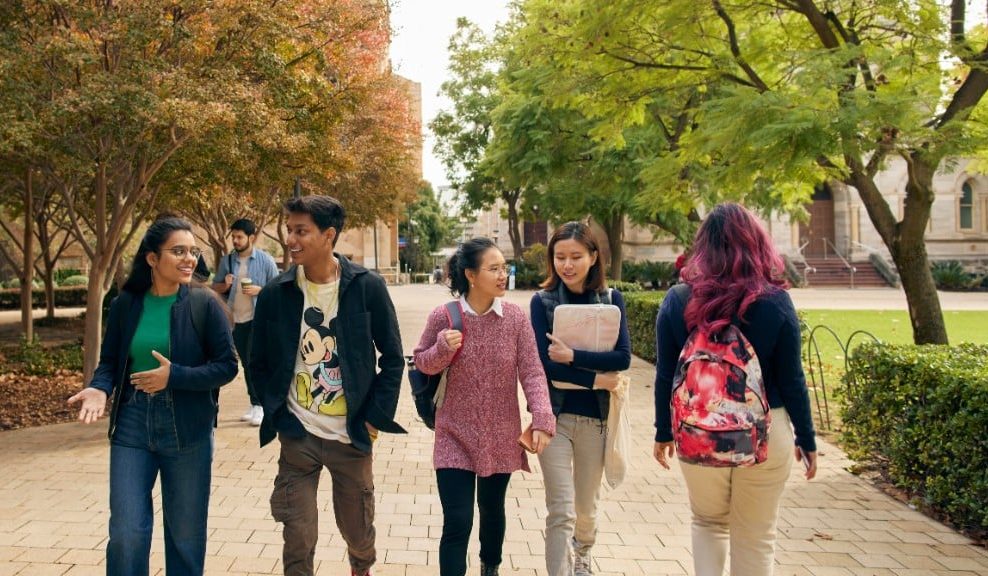
The move is part of the country’s broader national strategy aimed at ensuring the sustainable development of the international education sector while strengthening Australia’s engagement with Southeast Asia.
According to the Australian Department of Education, the New Overseas Student Commencements Cap (NOSC) for 2026 has been set at 295,000 places. These places will be distributed across universities and other education providers throughout the country.
Higher quotas for public universities
Public universities classified under Table A institutions—those that receive full government funding under the Higher Education Support Act 2003—have been given provisional allocations. These allocations are based on each university’s performance, capacity, and alignment with national priorities.
The government has also encouraged universities to strengthen their engagement with Southeast Asia, which has become a key strategic region for Australia. This engagement is expected to extend beyond education to include collaboration in areas such as agriculture, natural resources, research, and economic development.
Julian Hill, Australia’s Assistant Minister for International Education, emphasized the importance of the international education sector to the country.
“International education has delivered profound benefits for Australia for decades. It is a $51-billion industry that helps develop global leaders while strengthening Australia’s international relationships,” Hill said.
He added that the decision to increase the 2026 quotas recognizes universities that have demonstrated a genuine commitment to building partnerships and engagement with Southeast Asia, which the government views as a strategic national interest.
Regional universities benefit the most
Among Australia’s 37 public universities, 32 institutions applied to increase their international student intake, while five universities chose to maintain their current numbers.
Regional universities are expected to benefit the most from the policy changes. Institutions such as Charles Sturt University, Federation University, the University of Newcastle, and Charles Darwin University received some of the largest percentage increases in their international student quotas.
Education Minister Jason Clare said the government wants the growth of international education to occur in a more balanced and sustainable way, ensuring that the benefits are shared across different parts of the country rather than concentrated in major metropolitan universities.
“Regional universities play a crucial role in supporting local communities and strengthening regional economies. That’s why we are supporting them by expanding their international student allocations,” Clare said.
Focus on student housing

In addition to adjusting enrolment caps, the government has also emphasized the importance of ensuring safe and adequate accommodation for international students.
Currently, government data indicates that:
- More than 11,000 student housing beds are under construction
- 15,000 beds have already received approval
- Another 12,000 beds are in the planning stage
Universities are expected to demonstrate concrete efforts to expand student housing capacity, which is considered an important factor in determining whether they receive additional enrolment quotas.
Minimum quotas guaranteed
All universities have been allocated at least the same number of international student commencements as in 2025, although adjustments may still be made in special circumstances.
According to analysis by Nicholas Dillon, Director at consulting firm Nous Group, the Group of Eight (Go8)—Australia’s leading research-intensive universities—will see their total international student quota increase by nearly 5,500 places, representing about 9 percent growth in 2026.
However, Dillon noted that much of this increase results from the planned merger between the University of Adelaide and the University of South Australia, the latter of which was previously outside the Go8 group.
When the merger effect is excluded, the real increase for Go8 universities is closer to 2,500 additional places, or roughly 4 percent growth. This is significantly lower than the 14 percent increase allocated to universities outside the Go8.
A different approach from the UK
Dillon explained that the policy reflects a growing divergence between Australia and the United Kingdom in how they manage international student flows.
In the UK, international students are increasingly concentrated in elite universities such as those within the Russell Group. Australia, by contrast, is attempting to redistribute international student enrolments more evenly across institutions and regions, rather than allowing demand to cluster primarily at top-tier universities.
This approach is intended to promote regional development, reduce pressure on major cities, and ensure the long-term sustainability of Australia’s international education sector.
